3rd Annual Health Symposium 2026
March 31, 2026
Advanced brain and neurological care delivered locally as The Clinic Group continues to support the vision of a First World Eswatini
BY NTSIKA J MABUZA
Bringing advanced healthcare closer to home
His Majesty King Mswati III’s vision of a First World Eswatini calls for a country where quality services, infrastructure, expertise and innovation are developed to meet the needs of Emaswati.
In healthcare, that vision increasingly means building the capacity to manage complex medical conditions within the Kingdom, reducing the need for patients to travel beyond the country in search of specialised treatment.
It is within this broader national ambition that The Clinic Group continues to invest in specialised healthcare capabilities. Its vision of “Africa’s Leading Integrated Business Partner” guides its commitment to developing solutions that respond to the changing healthcare needs of the people it serves.
That commitment has now been demonstrated through two significant neurosurgical procedures successfully performed at The Clinic Group’s Manzini Clinic, involving approaches that are understood, according to the clinical team and available records, to be the first of their kind to be performed this way in Eswatini.
The procedures were performed by Dr Mpumelelo Shongwe, Neurosurgeon, together with the medical team. Although the cases involved very different neurological conditions, both demonstrated the ability to assess complex cases, consider specialised surgical options and deliver advanced neurosurgical care within the country.
HYDROCEPHALUS: WHEN THE CONVENTIONAL ROUTE WAS NO LONGER SUITABLE
One of the cases involved hydrocephalus following a motor vehicle accident that resulted in a traumatic subarachnoid haemorrhage.
Hydrocephalus occurs when cerebrospinal fluid builds up in or around the brain, creating pressure that requires medical management. The patient had previously received a ventriculoperitoneal (VP) shunt, a commonly used procedure that diverts excess cerebrospinal fluid from the brain to the abdomen.
However, the patient's subsequent abdominal surgical history presented a new challenge. The abdomen was no longer considered a suitable route for managing the fluid.
THE CHALLENGE: FINDING AN ALTERNATIVE ROUTE
The medical team therefore had to address a critical question: how could the excess cerebrospinal fluid continue to be diverted when the conventional abdominal route was no longer appropriate?
Rather than relying on the usual approach, the team assessed an alternative route that would allow the patient to continue receiving the necessary treatment.
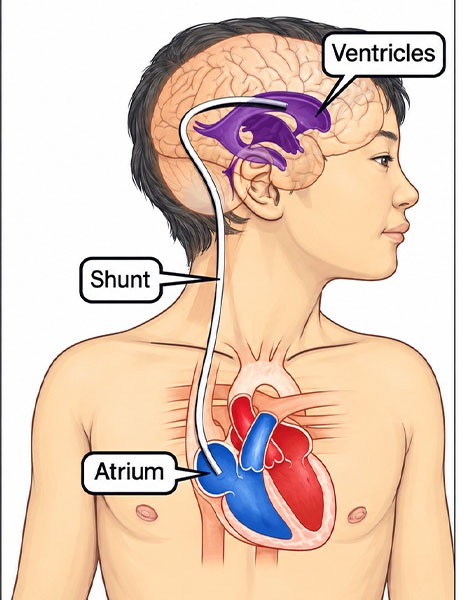
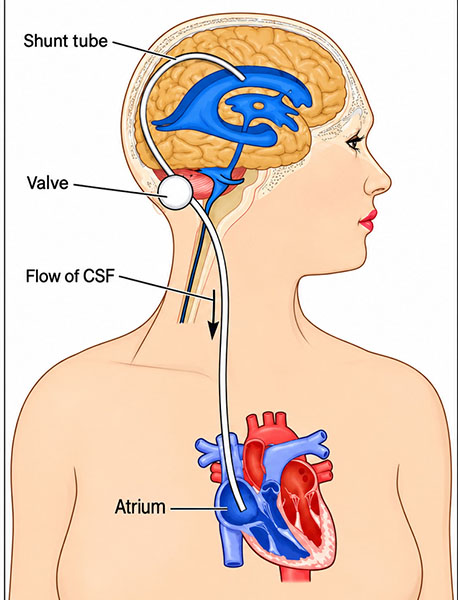
THE SOLUTION: A VENTRICULO-ATRIAL SHUNT
The team performed a ventriculo-atrial (VA) shunt, allowing cerebrospinal fluid to be diverted from the brain into the heart.
The procedure was successfully completed at The Clinic Group’s Manzini Clinic, and the patient was discharged home in good condition.
The case demonstrated the importance of having more than specialist expertise alone. Complex procedures require the combination of specialist medical knowledge, appropriate surgical facilities, theatre support, nursing care and the wider hospital infrastructure needed to manage the patient throughout the process.
For The Clinic Group, the procedure represents an example of how specialised medical intervention can be adapted to an individual patient's circumstances and delivered within Eswatini.
BRAIN TUMOUR: A DIFFERENT CHALLENGE, A DIFFERENT APPROACH
The second case demonstrated another aspect of modern neurosurgical capability.
The patient required surgery for a brain tumour, presenting the medical team with the challenge of determining an appropriate route to access the affected area.
In neurosurgery, the surgical pathway is an important part of the procedure. The team must consider the location of the tumour, the safest available access route and how to reach the target while protecting surrounding structures.
THE CHALLENGE: ACCESSING THE TUMOUR THROUGH A TARGETED ROUTE
In this case, the medical team selected an approach that allowed access through a considerably smaller opening than some conventional craniotomy approaches.
The objective was to create an appropriate pathway to the tumour while limiting the size of the surgical opening.
THE SOLUTION: A KEYHOLE TRANSBROW APPROACH
The team performed a supraorbital subfrontal, or keyhole transbrowapproach, using a small opening above the left eyebrow to access the affected area.
The opening measured approximately 2cm by 2cm, providing a targeted surgical pathway to the tumour.
The approach requires detailed anatomical planning and specialist neurosurgical expertise, with the surgical team working through a much smaller access point to reach the intended area.